
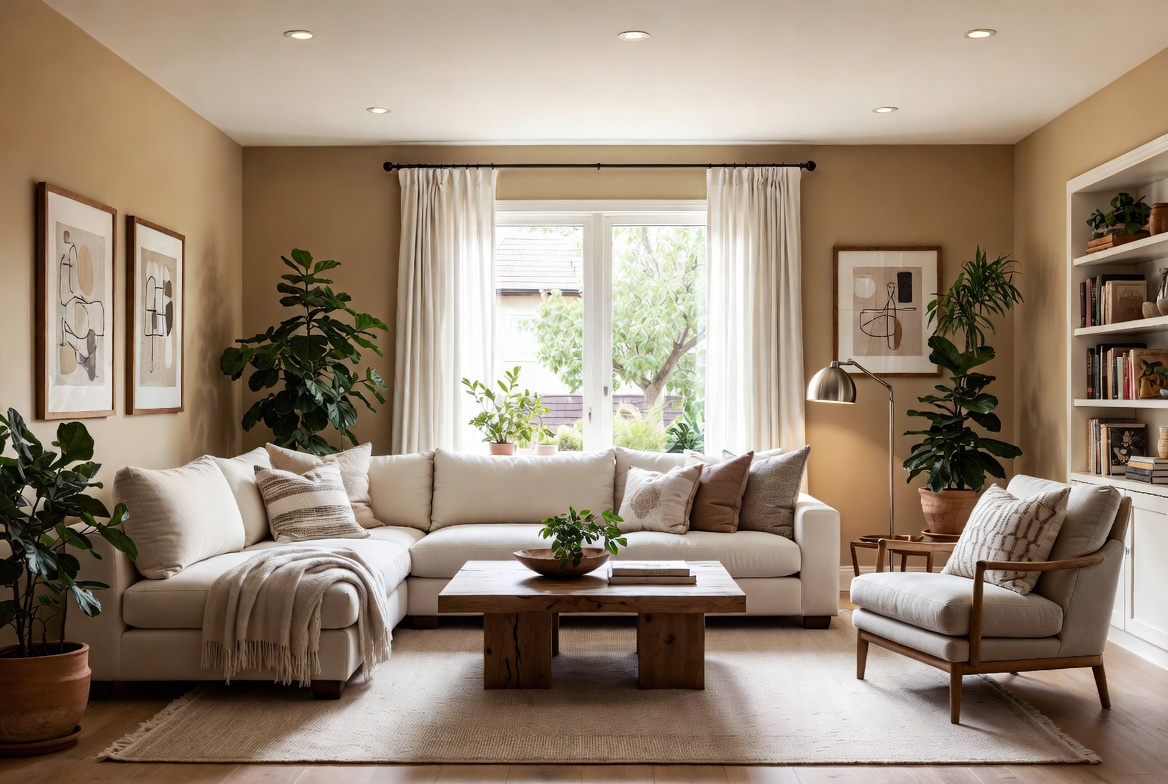
Small living Room Design Space That’s Actually Lived In
Small living Room Design Space That’s Actually Lived In: We’ve all been there. You scroll through picture-perfect living rooms online lawlessly fluffed pillows on a stark white sofa, a coffee table holding nothing but a single, obscure art book, and not a single charging cord or dog hair in sight. It looks calm. It also looks like a place where nobody is allowed to actually live.
Let’s reclaim the living room. Its name says it all: it’s the room for living. For movie nights that turn into sleepovers. For serious talks and silly games. For the chaos of a Tuesday evening and the quiet of a Sunday morning. Designing this space isn’t about creating a museum exhibit; it’s about building the ultimate, comfortable home base for your real, wonderfully imperfect life. Here’s how to do it, without the pressure of perfection.
Comfort is King (And Queen, and Jack)
Everything starts here. If it’s not comfortable, the room has failed. This goes beyond just a soft couch. It’s about designing for how your body wants to exist.Small living Room Design Space That’s Actually Lived In
Your sofa is the anchor. It should be deep enough to curl up in, firm enough to offer support, and covered in a fabric that invites you in. Performance fabrics are a modern miracle they resist stains, pet hair, and wear while still feeling soft. Don’t just sit on it in the store for ten seconds. Sit for two minutes. Pretend you’re watching a whole TV show. Does your back feel okay? Do you feel relaxed? Your butt will thank you later.
Then, build around that comfort. Add seating that encourages people to stay. A plush armchair in the corner for the reader. An ottoman that works as a footrest, extra seating, or a toy chest. Layer in the soft stuff: a chunky knit throw blanket, cushions you can actually hug, and a rug with enough pile to feel cozy under bare feet. This room should feel like a physical exhale when you walk into it.
Design for Conversation (Not Just for the TV)
For decades, the living room had one focal point: the television. It still might be a big player, but it shouldn’t be the dictator of your furniture layout. The best living rooms have multiple focal points that encourage connection.Small living Room Design Space That’s Actually Lived In
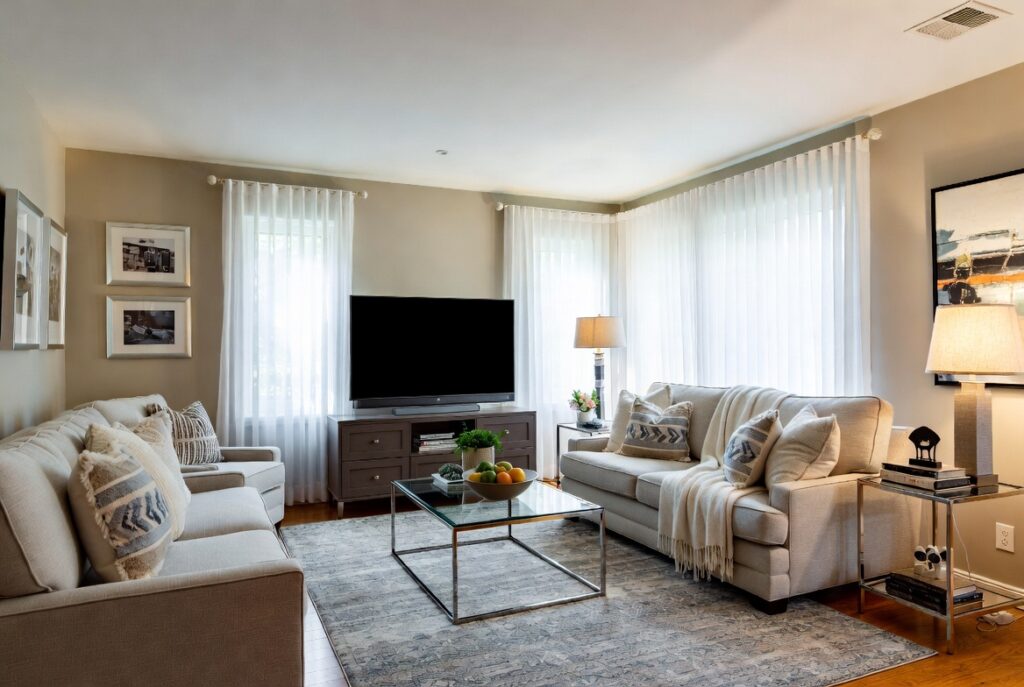
Try this: arrange your main seating pieces so they can see each other easily. Chairs should face the sofa, not just the TV. Create little conversation nooks. This might mean floating your sofa in the middle of the room, facing a pair of chairs, with the TV on the side wall. It feels more dynamic and social.
Lighting is your secret weapon for atmosphere. Overhead lights are for finding lost earrings. For living, you need pools of warm, inviting light. Use floor lamps in dark corners, table lamps on side tables, and maybe some plug-in wall sconces. Put everything on dimmers. The ability to lower the lights is the single fastest way to make a room feel intimate and relaxing.Small living Room Design Space That’s Actually Lived In
Fight the “Beige Void” with Color and Texture
A safe, neutral palette can feel calming, but without personality, it can also feel like a doctor’s waiting room. You don’t need to paint the walls neon green, but you do need to inject life.Small living Room Design Space That’s Actually Lived In
Color is emotion. It doesn’t have to be loud. A deep, moody blue on a single wall. Mustard-yellow velvet cushions on a gray sofa. A big piece of art with a splash of ruby red. These aren’t just decorations; they’re mood-setters. They add energy and depth.Small living Room Design Space That’s Actually Lived In
Texture is what makes a room feel rich and layered, not flat and one-dimensional. It’s the nubby weave of your basket holding magazines. The smooth, cool ceramic of a vase. The rough grain of a reclaimed wood coffee table. The soft shearling of a pillow. Mixing a variety of textures wood, metal, fabric, ceramic, plants makes a room feel collected over time and incredibly inviting to the touch.
Most Important Principle: It Has to Tell Your Story
This is the part that no interior designer can do for you. A living room that looks like it was ordered from a catalog will never feel like home. It needs the fingerprints of your life all over it.
This means the shelves shouldn’t just hold decorative objects; they should hold your favorite novels, the seashells from your beach trip, your grandma’s vintage camera. The walls shouldn’t just have generic art; they should have your child’s framed painting, the concert poster from your favorite band, the photograph you took on a hike.Small living Room Design Space That’s Actually Lived In
Let the room be a little imperfect. Let the coffee table have a ring from a cold drink. Let the throw blanket be the one your friend knitted that’s a weird color but incredibly soft. This evidence of life is what gives a room its soul. It tells you and everyone who enters, “A real, interesting family lives and loves here.”
Forget the pressure to make it flawless. Focus on making it yours. Choose the comfortable sofa, arrange it for talking, add color that makes you happy, and then fill it with the stuff of your life. Don’t design a living room for a magazine. Design it for the life you’re already living, and watch it become the best room in the house.Small living Room Design Space That’s Actually Lived In